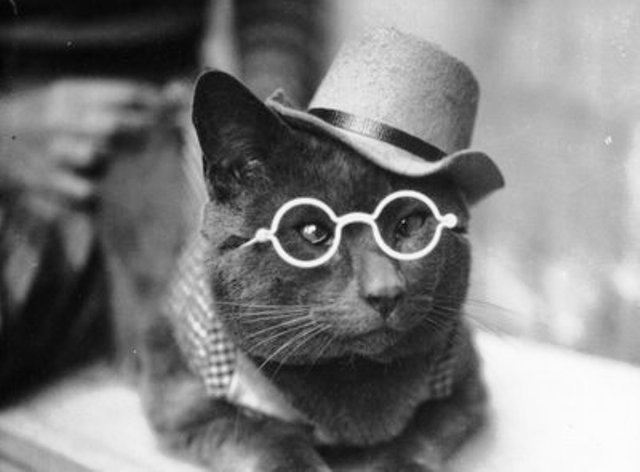
This isn’t a fairy tale. This is the true story of Old Nig, the official mouser and resident morale-booster of New York City’s most infamous jail.

Old Nig’s story is intertwined with one of the most scandalous murder trials of the Gilded Age. In 1891, a 22-year-old medical student named Carlyle W. Harris was arrested for poisoning his secret young wife, Helen Potts, with a morphine overdose. It was a sordid tale of secret marriages, a botched abortion, and high-society drama that the New York press devoured.
After a sensational trial, Harris was found guilty and sentenced to death. He spent his final 15 months locked in cell #8 on Murderers’ Row at The Tombs, waiting for his date with the electric chair. And it was there that he met a four-legged friend who offered a glimmer of comfort in the grim prison.
During his time on death row, Harris penned a surprisingly tender poem about his daily visitor:
“Old Nig,” my friend, comes every day—
A silent friend and leal;
No confidence does he betray,
He is as true as steel.
So, who was this remarkable cat who managed to win the heart of a convicted killer?
A Feline Warden in a Sinking Prison
Old Nig wasn’t a stray who wandered in; he was an employee. Around 1893, a keeper named Connelly brought the kitten into the gloomy building with a clear job description: get the mice. The prison, officially called the Halls of Justice, was a notoriously awful place. Built in 1838 on the soft, swampy ground of the former Collect Pond, the massive granite structure was literally sinking.

The foundation constantly shifted, water seeped through cracks, and the cells were perpetually damp, moldy, and dangerously overcrowded. Designed for 300 inmates, it often held far more. For most, life inside meant being crammed into a tiny, wet cell for 22 hours a day. It was the perfect breeding ground for rats, and Old Nig was the first line of defense.
Over his incredible 18-year career, the black cat served under eight different wardens, becoming one of the prison’s most consistent figures. While wardens came and went, Old Nig remained, diligently patrolling the tiers. The bottom floor housed the mentally ill, the top floors held those with minor offenses, and right in the middle was Murderers’ Row, where the cat seemed to do his most important work.

Imagine being a prisoner in that hopeless environment. The only break from the misery might be the sight of a black cat, padding silently along the iron walkway, maybe even stopping to rub against your cell bars. For Carlyle Harris and others, Old Nig was more than a mouser; he was a "sympathetic heart" in a heartless place.
The End of an Era
Carlyle Harris’s story ended on May 8, 1893, when he was executed at Sing Sing prison. His mother, convinced of his innocence, had a scathing epitaph engraved on his tombstone: “Murdered by Twelve Men.”
Old Nig, however, outlived his famous friend by nearly a decade. He continued his duties as the old Tombs building crumbled around him. Finally, in 1902, the city demolished the sinking prison and built a new one on the site, connected to the Criminal Courts Building by a “Bridge of Sighs.”

The cat passed away on May 31, 1901, just a year before the move. According to a newspaper report, he died peacefully in the arms of Keeper Connelly, the very man who had brought him to the prison 18 years earlier. There was even a plan to have the beloved cat taxidermied and placed in the warden's office as a permanent memorial, though it’s unknown if this ever happened.
Today, the site of the original Tombs prison is a public space, Collect Pond Park. The current Manhattan Detention Complex across the street is still universally known by the old nickname. So next time you're downtown, take a stroll through the park. You’ll be standing on the very spot where a little black cat once brought a flicker of light to one of New York’s darkest places.