The Brooklyn Robins had won two of their first fourteen games.
It was April 1927, and manager Wilbert Robinson was running out of ideas. The team had lost five straight to the Braves, Giants, and Phillies. The Brooklyn Daily Eagle called them "Uncle Robbie's Daffiness Boys." They needed a miracle.
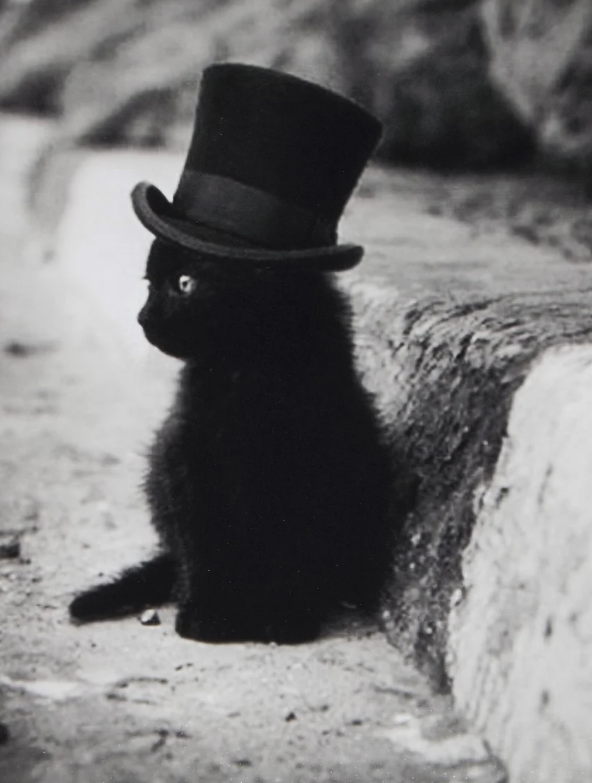
Then a stranger knocked on Robinson's apartment door holding a three-month-old black kitten.
"Mr. Robinson, here is something to break the jinx."
Robinson hesitated. "Black cats are bad luck."
"Sometimes," the stranger said. "But it takes a thief to catch a thief and maybe it takes a jinx to lick another jinx."
The next day, Robinson walked into the Ebbets Field clubhouse with the kitten perched on his shoulder. He gave his horrified players three days to test the theory. Lefty pitcher Watty Clark built a house for the cat out of a soapbox. The clubhouse boy was sent for milk. Before that night's game against the Phillies, pitcher Jumbo Elliott—a giant of a man—was told to pet the kitten for luck. The cat nearly vanished in his enormous hands.

Brooklyn shut out Philadelphia 7-0.
The team christened their new mascot by breaking a bottle of milk over a chair and letting it shower down onto the kitten. They named him Victory.
With Victory in the dugout, the Robins won their next four games. The little cat from the streets was now a local celebrity, living in luxury at the ballpark with daily milk and fresh fish on Sundays. The Brooklyn Daily Eagle ran a series of interviews with the cat, conducted through a human interpreter. When another fan tried to donate a second lucky cat, Victory reportedly dismissed the newcomer as a common alley cat who "lacked consistency."
The Robins finished the 1927 season in sixth place. But the superstition stuck.
Twenty-Four Years Later
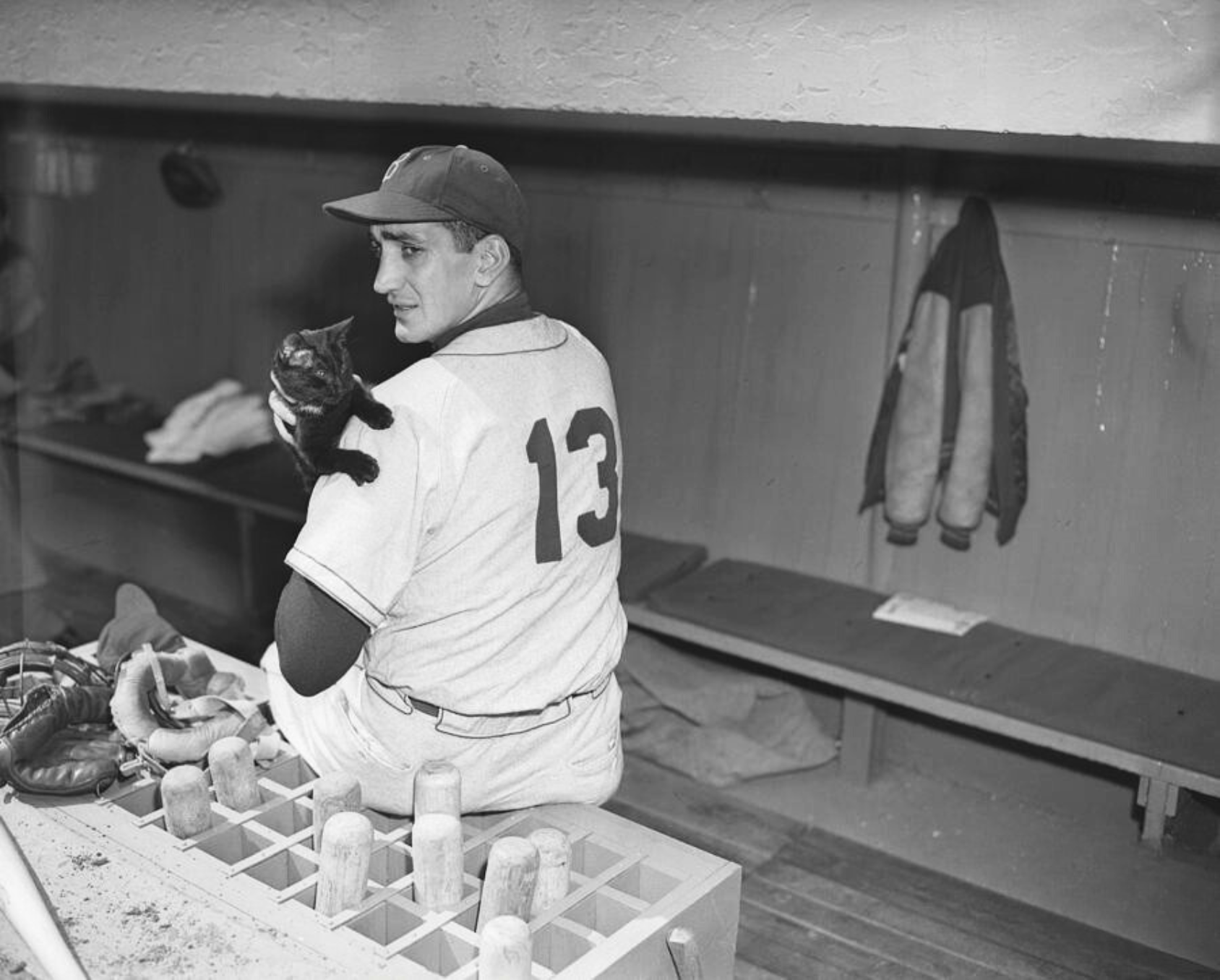
On April 13, 1951, pitcher Ralph Branca grabbed a black cat before an exhibition game against the Yankees. The date was Friday the 13th. By holding the cat and turning to show his number 13 jersey, Branca was sending a message: Brooklyn was not afraid of bad luck signs.
The Dodgers won 7-6.
Later that season, Branca gave up the walk-off home run to Bobby Thomson that knocked Brooklyn out of the pennant race. The Shot Heard 'Round the World. Maybe he should have brought the cat to that game too.
From Ebbets Field to a Revolutionary War Farmhouse
Both cats worked their luck at Ebbets Field in Crown Heights. The stadium was demolished in 1960, three years after the Dodgers moved to Los Angeles. A wrecking ball painted to look like an enormous baseball crashed through walls that had once held players like Jackie Robinson, Pee Wee Reese, and Roy Campanella. A twenty-story housing project rose on the site. Today, on a small patch of fenced-in grass where the clubhouse used to be, signs advise residents to keep their pets off the lawn.
But the team's Brooklyn story started somewhere else entirely.
Before Ebbets Field was built, the Dodgers played at Washington Park in Park Slope. Their clubhouse was not some fancy locker room. It was a battered 17th-century stone farmhouse that had served as a key site during the Revolutionary War.
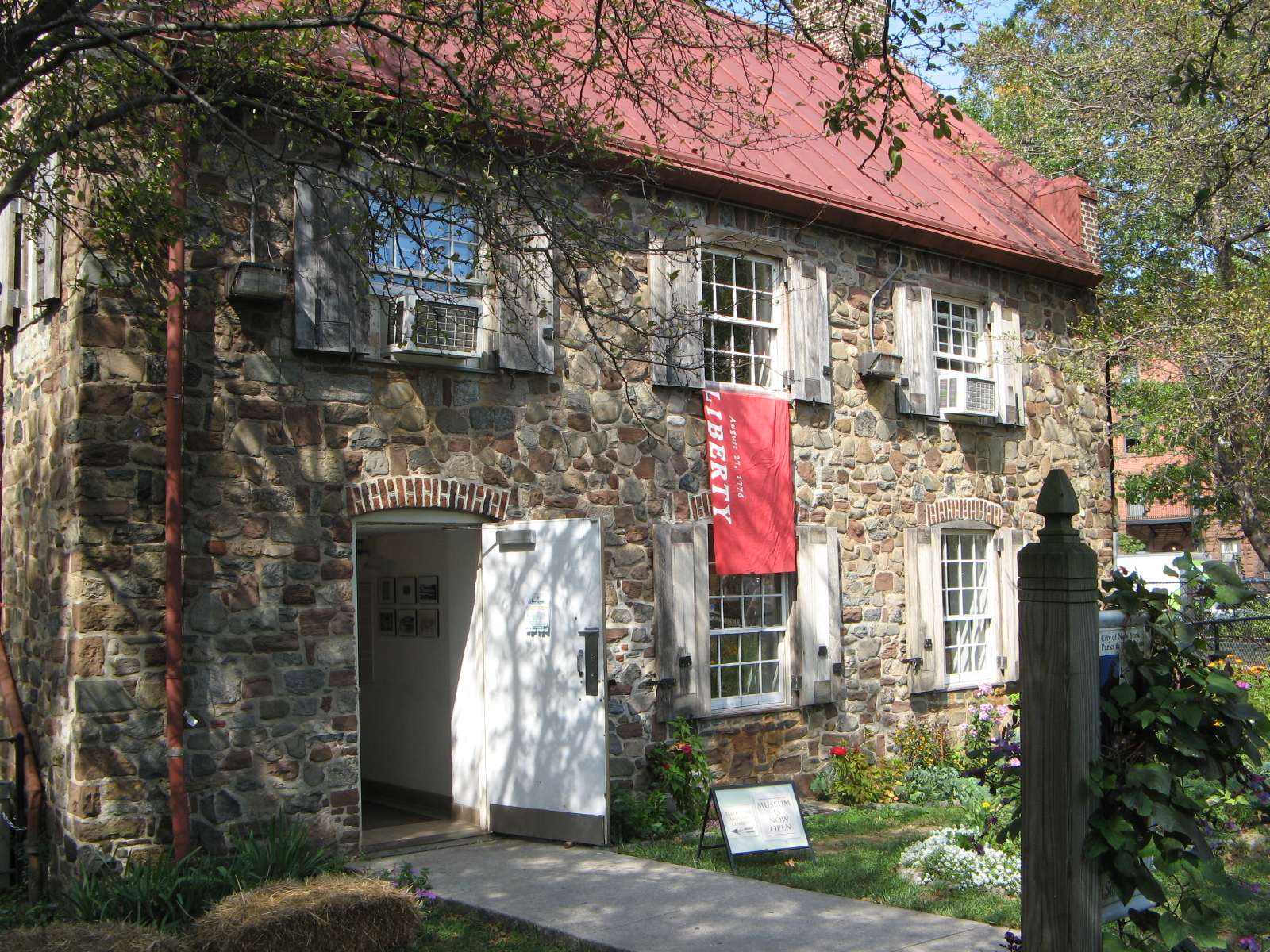
Built in 1699, the Old Stone House was where 400 Maryland soldiers held off the British in 1776, allowing Washington's army to escape across the Gowanus marshes. George Washington reportedly watched the battle from a redoubt on nearby Cobble Hill and said, "Good God, what brave fellows I must this day lose."
A century later, the same stone walls were deflecting foul balls from Brooklyn's earliest baseball stars. The players dressed in the dilapidated old house, already a historic landmark. They must have felt the ghosts of history. They probably also dodged a few leaks from the tin roof they had patched on.
The house was eventually buried under 30 feet of earth when street grading raised the level of Fourth Avenue. In the 1930s, workers dug up the original stones and reconstructed it exactly as it once stood.
Today, the Old Stone House sits in J.J. Byrne Playground in Park Slope. It serves as a museum and cultural center, telling the story of the Battle of Brooklyn and the neighborhood's rich history. You can stand on the same ground where Revolutionary soldiers fought, where Brooklyn's first baseball heroes played, and where a team once believed a stray black kitten could reverse their luck.