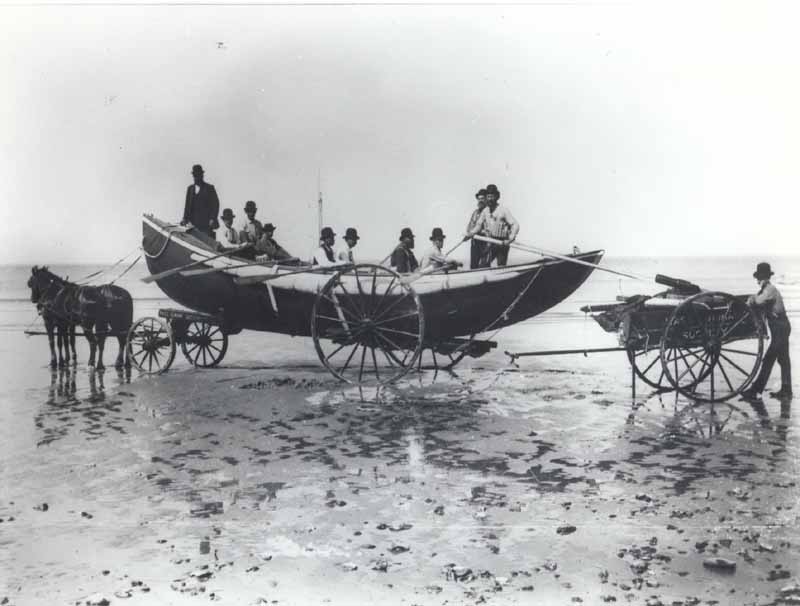
Meet Bill, the unsung equine hero of Fire Island’s Blue Point Life-Saving Station. In an era when the Long Island coast was known as the “Graveyard of the Atlantic,” Bill wasn’t just a horse; he was a first responder with a thick coat and a steady heart.
A Horse on the Front Lines
From the late 1800s into the early 20th century, the U.S. Life-Saving Service—the heroic forerunner to today’s Coast Guard—was the only hope for thousands of shipwrecked sailors. These stations were manned by crews of seven or eight “surfmen,” tough-as-nails watermen who lived by a chillingly brave motto: “You have to go out. You don’t have to come back.”
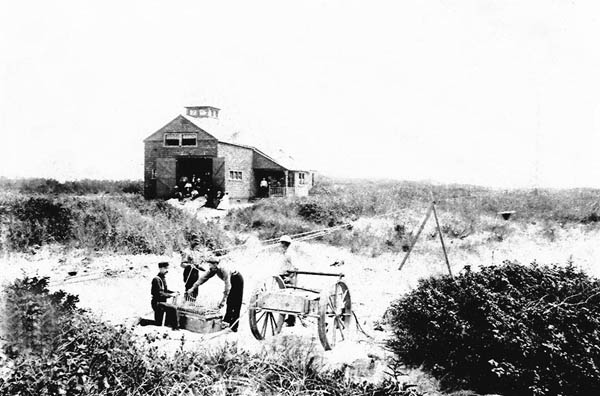
Their base of operations on Fire Island was the Blue Point Station, a sturdy two-story building located about four miles south of where Patchogue is today. Here, surfmen stood watch day and night. During the day, a lookout scanned the horizon from an observation tower. At night, they patrolled the beach on foot, looking for ships sailing dangerously close to shore.
If a vessel was spotted in trouble, the alarm would sound. A surfman would ignite a red Coston flare, a brilliant warning to the ship's captain: “Turn back now!” Then, the real work began.
Lieutenant Commander Robert V. Hulse, who served at the station in the 1930s, vividly remembered the controlled chaos. The crew would rush to the boathouse to get the surfboat—a vessel weighing a good thousand pounds, not including gear. But how do you move a boat that heavy through deep, loose sand in the middle of a nor'easter? That’s where Bill came in.
Hulse recalled the 16-year-old horse as a seasoned veteran. After being woken from their bunks, the surfmen would quickly put the harness over "old Bill." While the men pushed from the sides, Bill did the heavy pulling, dragging the boat and its cart across the beach to the water’s edge. He was as much a part of the crew as any of the men.
An Unbelievable Four-Legged Rescue
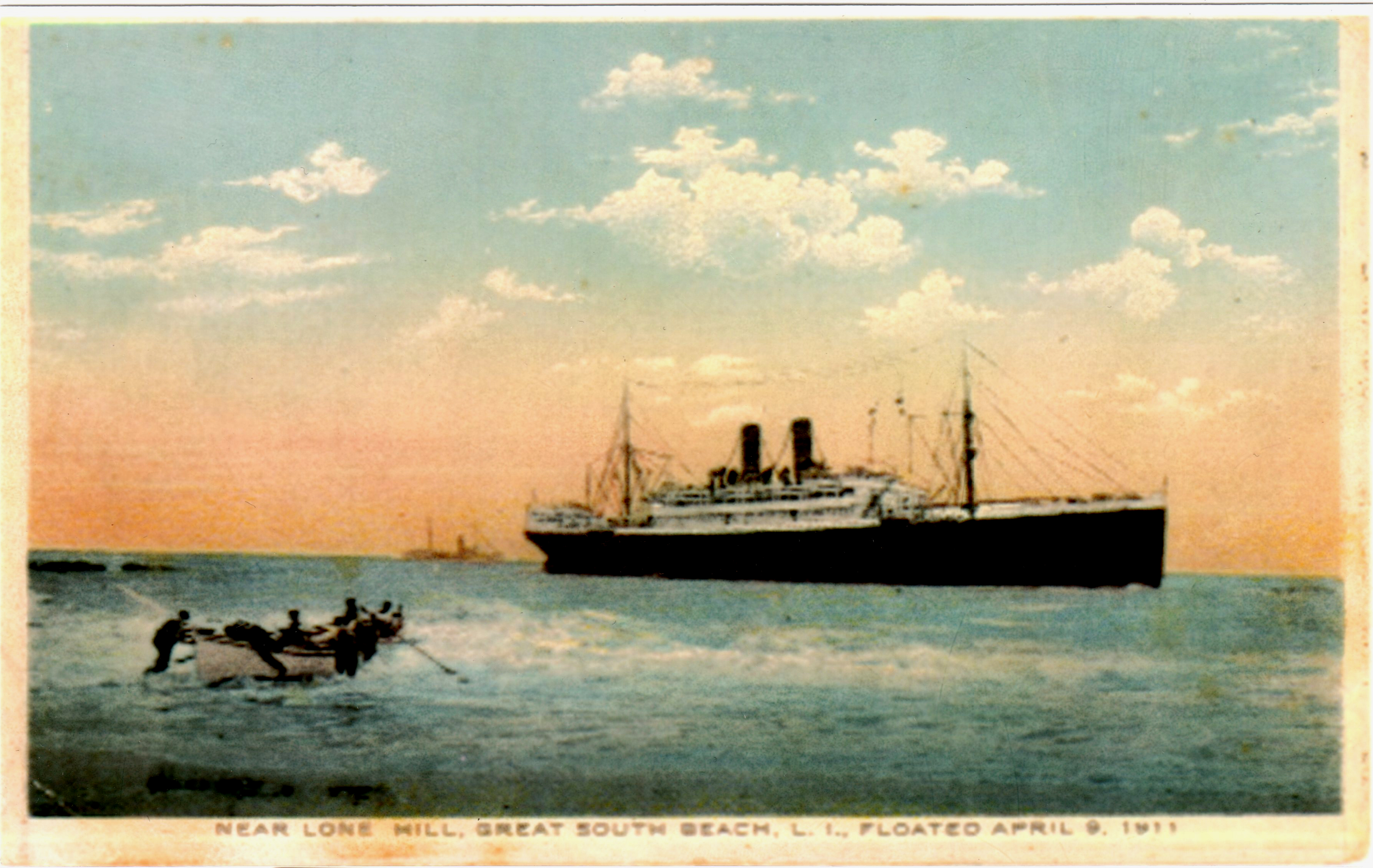
A perfect example of their perilous work happened on the foggy night of February 4, 1896. The British steamship Lamington, hauling a cargo of fruit from Spain, slammed into a sandbar just two miles from Bill’s station.
Launching a boat was impossible in the violent surf. The crew turned to their other tool: the breeches buoy. First, they used a small cannon called a Lyle gun to fire a thin rope out to the ship. The sailors on board would then haul in a thicker hawser cable and secure it to the mast. Attached to this cable was the breeches buoy—a life ring with a pair of canvas shorts sewn into it. One by one, the shipwrecked sailors would climb in and be pulled to safety over the raging waves.
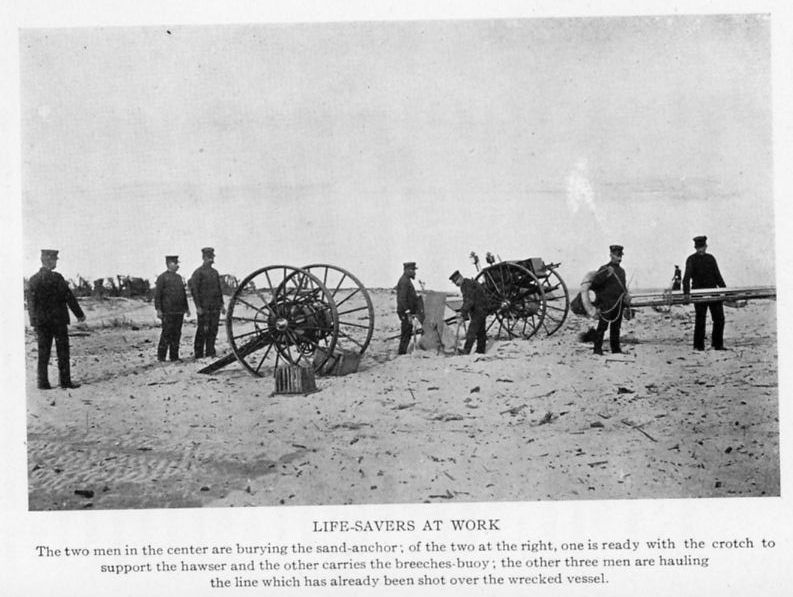
They saved 18 sailors from the Lamington that night. But the most charming part of the story? They saved the ship’s animals, too.
Riding along in the breeches buoy with one of the sailors was the ship’s pet, an 18-pound cat! Once safely ashore, the giant feline was gifted to a local newspaper editor. A terrier was also rescued via the buoy and found a new home on Fire Island. Sadly, four trained ponies being transported to a New York City hotel couldn't be saved and were lost to the sea.
The Legacy of the Surf Horse
The Blue Point Station, built in 1856, remained in operation until 1937, long after the Life-Saving Service merged with the Revenue Cutter Service in 1915 to form the modern U.S. Coast Guard. As technology improved with radar, helicopters, and better navigation, the need for these rustic beach stations and their horse-powered rescues faded away.
Today, the Blue Point station is gone, a victim of time and tide. But the legacy of its surfmen—and its surf horse—endures. During its 44 years of operation, the U.S. Life-Saving Service responded to over 178,000 people in distress, saving nearly all of them. It was an incredible record, made possible by the grit of the men and the strength of horses like Bill.
So, the next time you take a ferry to Fire Island and walk along its beautiful, tranquil beaches, take a moment. Listen to the roar of the surf and imagine a time, not so long ago, when these sands were a place of high-stakes drama. Think of the surfmen who risked everything, and of old Bill, the faithful horse who helped pull life from the jaws of the sea, one rescue at a time.