Night watchman Louis Seibold heard the commotion and saw a terrifying orange glow coming from the Lion House. A fire! As he and a nearby police officer scrambled to call the fire department and Head Keeper Bill Snyder, they knew they were facing a catastrophe. Inside the old wooden building were a dozen lions, four leopards, a Siberian tigress, two pumas, and three hippos. If the fire spread, the heart of Central Park could become a very dangerous place.
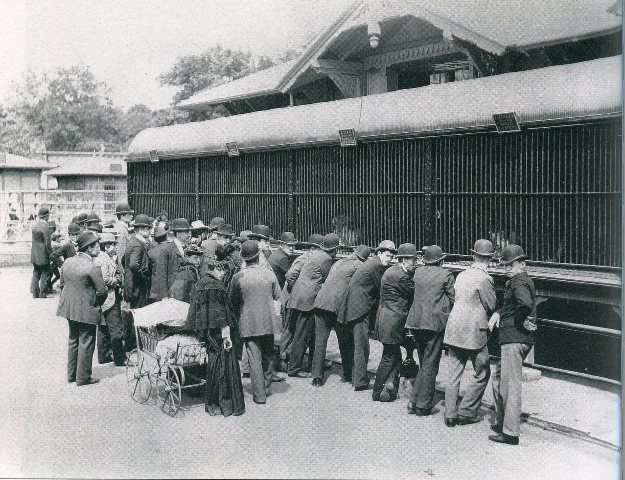
Firefighters from Engine 39 and Ladder 16 arrived to a scene of chaos. The big cats, terrified by the smoke and flames, thrashed in their cages, lashing out at anyone who came near. But as the humans struggled, one animal took matters into his own… well, into his own tank.
Caliph II, a massive 6,000-pound hippo, began to panic. His tank was right next to the wall where the fire had started. As he thrashed and spun in the water, he created enormous waves that splashed high up against the burning wooden wall. He was, in effect, a one-hippo fire brigade. Thanks to his frantic splashing—and the quick work of the firemen—the blaze was out in thirty minutes. Every animal was safe.
So, who was this accidental hero? And how did he end up in a prime spot to save the day?
Meet the Murphy Dynasty
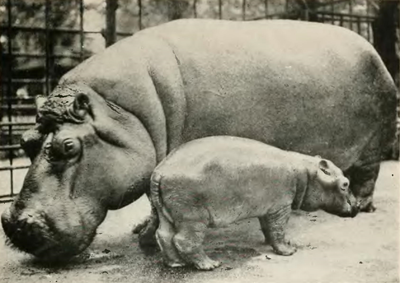
Caliph Murphy II was New York City royalty. He was born right in Central Park in 1908, the son of the zoo’s most famous resident: Miss Fatima Murphy, or "Mrs. Murphy" to her fans. Mrs. Murphy wasn’t just any hippo; she was the powerhouse matriarch who practically funded the entire menagerie.
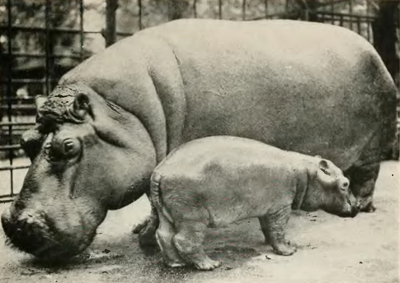
In the late 19th century, the Central Park Menagerie was a quirky, makeshift collection of animals, many on loan from circuses like P.T. Barnum's. The city didn't have much money to buy permanent animals. That’s where Mrs. Murphy came in. She and her mate, Caliph I, were a prolific pair. Over the years, she gave birth to around ten baby hippos.
The zoo's director, John W. Smith, struck a genius deal: he would trade each baby hippo (worth about $5,000 back then—a fortune!) to other zoos and circuses for a whole collection of less valuable animals. One baby hippo could be traded for lions, bears, camels, and more. Thanks to Mrs. Murphy's incredible fertility, a small, shabby menagerie was transformed into a world-class zoo.
A Zoo in a Police Station?
The setting for this animal kingdom was just as bizarre as its financing. The early menagerie was housed in the basement and on the grounds of the Arsenal building, located on Fifth Avenue at 64th Street. If you’re visiting Central Park today, you can still see it—it’s the spooky-looking castle that now houses the Parks Department offices.
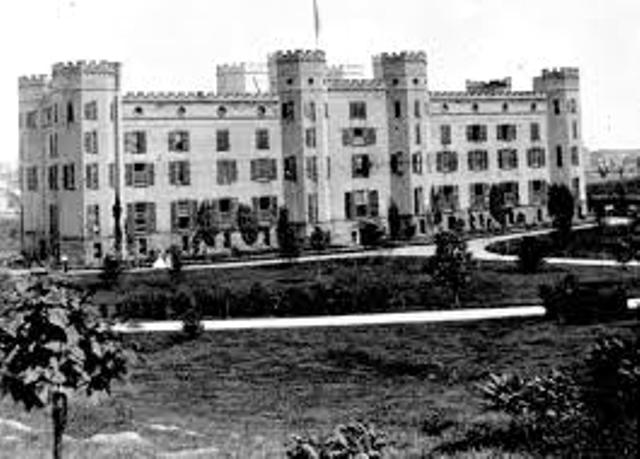
For decades, this single building was home to both the Central Park police squad and a growing collection of animals. Imagine being an officer trying to do paperwork while a bear grumbled in the basement and monkeys chattered nearby. Only in New York!
In winter, Mrs. Murphy and Caliph II would move from their outdoor pool into steam-heated tanks inside the Lion House. One keeper noted that the lions and tigers hated their noisy neighbors, grumbling as the hippos splashed "in their bathtubs." Little did they know that all that splashing would one day save their lives.
A Very New York Controversy
Mrs. Murphy was so famous that she even got caught up in a city-wide political scandal. In 1893, a letter in The New York Times complained that the zoo keepers—many of whom were Irish—were giving the animals "offensive" Irish names like Bridget, Patrick, and Murphy.
The issue exploded. Irish societies held meetings, and Mayor Thomas Francis Gilroy declared it a "disgrace." After a flurry of media attention, the Parks Department ordered the keepers to stop using distinctively Irish names. Mrs. Fatima Murphy, however, was so famous that she was granted an exception. She got to keep her name, a testament to her star power.
The End of an Era
Mrs. Murphy lived a long and celebrated life, passing away in 1929. Her body was taken to the American Museum of Natural History, where a model of her was put on display—a fitting tribute to the hippo who built a zoo.
Five years later, the old menagerie was torn down to make way for the beautiful Central Park Zoo we know today. Sadly, our hero, Caliph II, didn't get to enjoy his new, modern home for long. He passed away just a month after the new zoo opened in 1935.
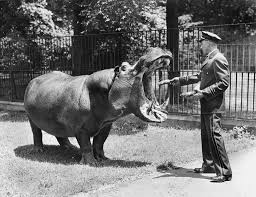
So next time you stroll past the Arsenal building or visit the Central Park Zoo, take a moment to remember Caliph Murphy II. He was more than just a 6,000-pound hippo; he was a New York City hero who, on one fiery night, became the big cats' best friend.