Ever stroll through Coney Island and wonder about the wild stories its shores could tell? Well, forget the hot dogs and roller coasters for a minute, because we’re diving into one of the most bizarre and tragic tales in New York City history: the story of Topsy, the elephant who met a shocking end at the hands of Thomas Edison.
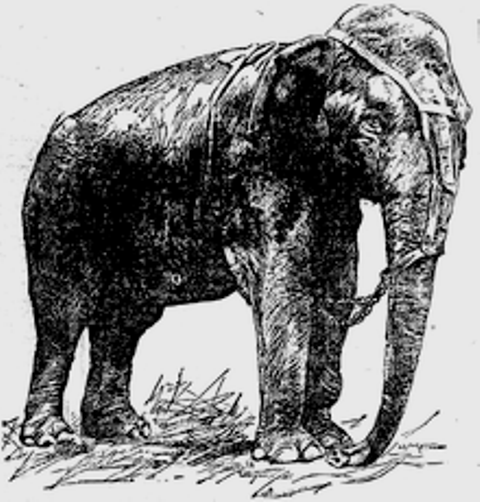
Our story starts around 1875, not in Brooklyn, but in Southeast Asia, where a baby elephant was stolen from her family. She was smuggled into the United States by a circus promoter who brazenly billed her as the “first American-born elephant.” They named her Topsy, a reference to a character in Uncle Tom’s Cabin, and for years, she was a star attraction.
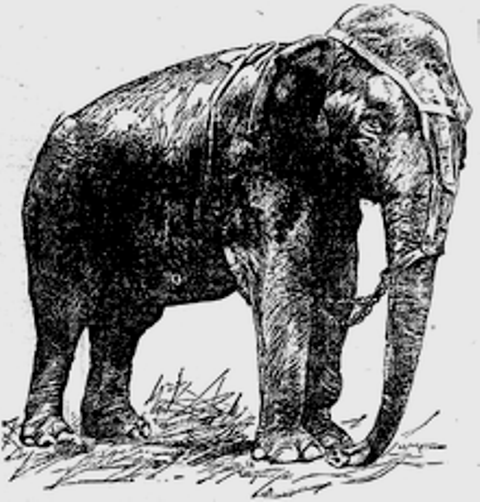
But life in the circus was no fairytale. Like many performing animals of the era, Topsy was subjected to brutal training methods, including prodding with sharp hooks and hot pokers. Unsurprisingly, this treatment gave her a notoriously short temper. After a few run-ins with abusive handlers, the breaking point came in 1902 right here in Brooklyn. A spectator reportedly threw sand in her face and tried to give her a lit cigarette. Topsy retaliated, killing the man. Payback, as they say, is a bitch.
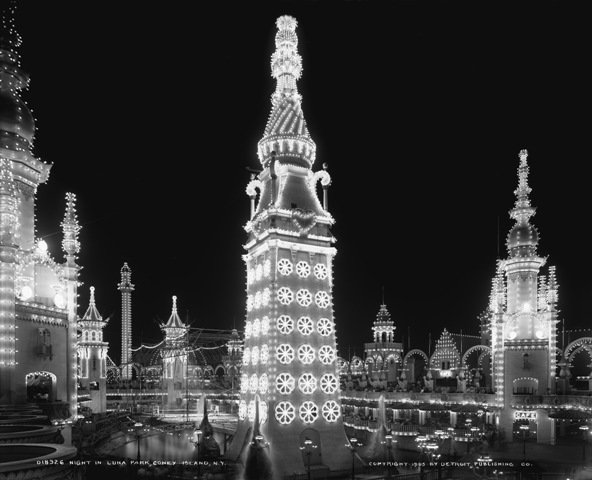
Publicly labeled a "bad" elephant, Topsy was sold to the owners of Sea Lion Park in Coney Island. A year later, the park was bought by Frederic Thompson and Elmer “Skip” Dundy, who were busy building a dazzling new attraction: Luna Park. For Topsy, things were about to go from bad to worse.
The new owners put her to work as a four-legged construction vehicle, hauling heavy materials across the site. But her volatile reputation lingered, and one chaotic day sealed her fate. Her handler, a notoriously cruel man named William “Whitey” Ault, got drunk and tried to ride Topsy down the middle of Surf Avenue. When she refused to cooperate, he began viciously prodding her with a pitchfork in front of a crowd.
A policeman intervened, but the mayhem continued. Whitey led Topsy to the police station on West 8th Street, where she promptly got wedged in the front doorway. You read that right—an elephant stuck in the entrance of a Coney Island police station. After her owners bailed out the drunken handler, they fired him on the spot. But now they had a problem: a "killer" elephant nobody knew how to control. They tried to give her away to a zoo, but no one wanted her. With no other options, they made a grim decision: Topsy had to be euthanized.
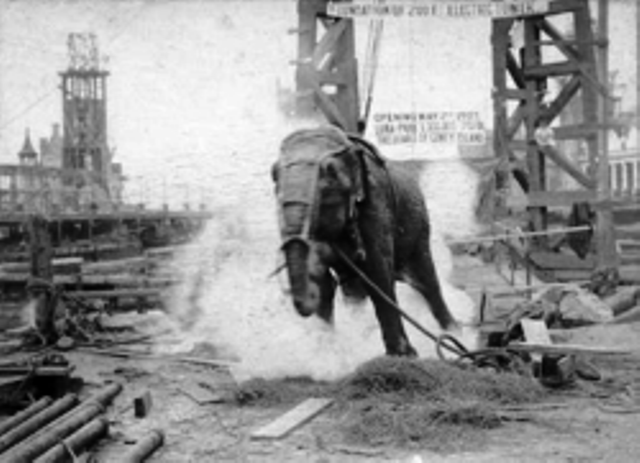
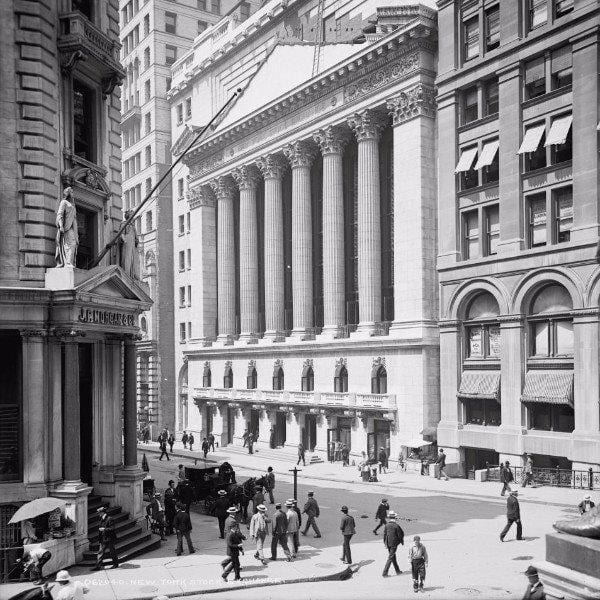
But this wasn’t going to be a quiet affair. This was Coney Island, after all. Initially, they planned a public hanging, but the ASPCA thankfully stepped in to stop that grotesque idea. Then, a new plan emerged, one that would entangle Topsy in one of the biggest tech rivalries of the day: the "war of currents" between Thomas Edison and Nikola Tesla.
Edison, a champion of direct current (DC), was on a ruthless campaign to prove that his rival Tesla's alternating current (AC) was dangerously unsafe. His go-to PR stunt? Publicly electrocuting stray animals with AC power. When he heard about Topsy, he saw the ultimate opportunity. Edison’s company agreed to orchestrate the electrocution, even offering to film it with their newfangled motion picture camera.
On January 4, 1903, a crowd of 1,500 spectators gathered in the muddy construction site of Luna Park for the morbid event. For a "humane" execution, they planned a three-pronged attack: feeding Topsy cyanide-laced carrots, electrocuting her with 6,600 volts of AC, and strangling her with a steam-powered winch—just in case.
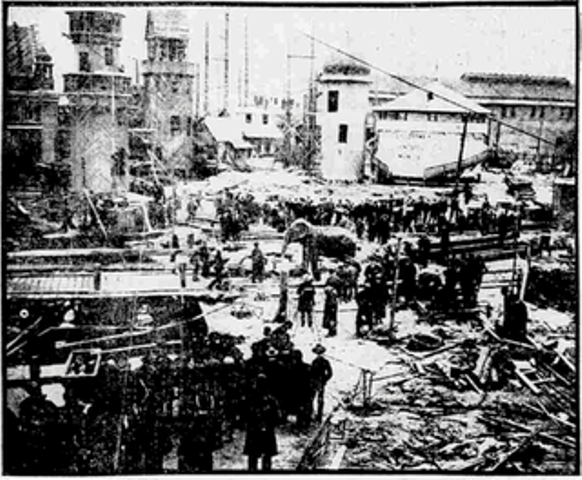
Topsy, however, seemed to know what was coming. She refused to cross the bridge to the execution platform and shook the copper-lined sandals (designed to conduct the electricity) off her feet. After hours of struggle, she finally ate the poisoned carrots. The switch was thrown. There was a flash of fire and a cloud of smoke, and Topsy fell to the ground in seconds. Her tragic, tortured life was over. She was only about 35 years old, roughly half the normal lifespan for an elephant in the wild.
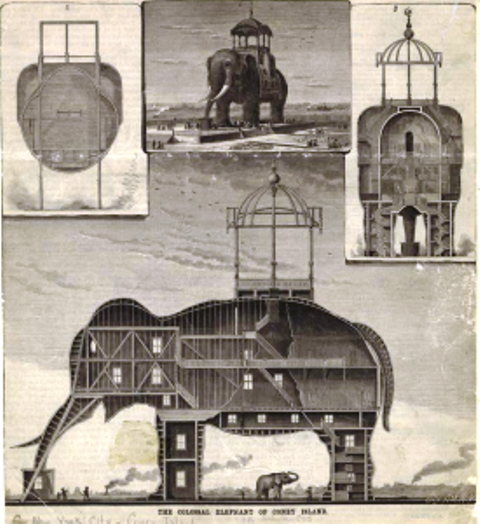
And here’s where the story gets a final, unbelievable twist of New York irony. Topsy was executed on the very spot where another famous Coney Island elephant had met its end years earlier. From 1885 to 1896, the site was home to the "Elephantine Colossus," a spectacular 12-story hotel shaped like a giant elephant. With rooms in its legs and an observatory in its eyes, it was a marvel of its time—and later, a notorious brothel. It too had a dramatic end, burning to the ground in a massive fire.
Just four months after Topsy’s death, Luna Park opened to the public, its towers glittering with over 250,000 electric lights—the same modern marvel that had been used to kill her. Today, the story stands as a shocking reminder of a different time, a painful chapter in the history of both animal welfare and scientific showmanship.
So next time you’re enjoying the sea breeze at Coney Island, take a moment to remember Topsy. Her ghost haunts the history of this famed amusement district, a symbol of the dark, strange, and unforgettable stories that make New York City what it is.