
Picture the Upper East Side in the 1880s. The Gilded Age is in full swing, and if you’re anyone in New York’s literary scene, there’s only one place to be on a Saturday night: a salon hosted by the city’s most sophisticated, charming, and well-dressed critic. That host’s name? General Muff. And yes, he was a cat.
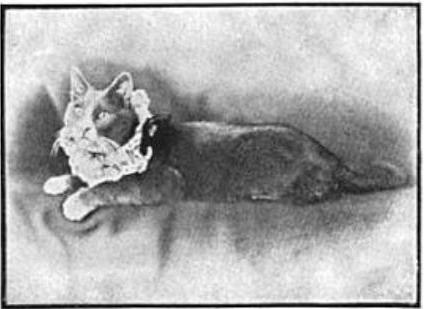
This is the delightful, true story of a feline celebrity who held court in a brownstone at the corner of Park Avenue and East 59th Street. General Muff was, by all accounts, "a real nobleman among cats." He was a soft gray Maltese with dapper white paws and a regal air that captivated everyone he met.
His human companion was Mary Louise Booth, a powerhouse in her own right. As the founding editor of Harper’s Bazar, Mary was one of the most influential women in New York publishing. But at the weekly parties in their home, Muff was the undisputed star.

A Cat About Town
Every Saturday night, Mary Booth’s home at 101 East 59th Street transformed into the city’s premier literary salon. Authors, artists, and statesmen flocked to her parlors, which were filled with trinkets from around the world. But the main attraction was often the cat of the house.
General Muff took his hosting duties very seriously. He would saunter among the guests, dressed for the occasion in one of his expensive collars—perhaps a dainty ribbon, a Russian leather band, or his favorite lace collar, a gift from an adventuring writer friend. He would greet dignitaries and poets with equal aplomb, charming his way through the crowd.
No evening was complete without Muff making a grand entrance, often with a freshly caught mouse proudly displayed as an offering to the guests. You read that right. While the humans discussed poetry and politics, their feline host was busy providing the evening’s… entertainment. He was an indoor cat who rarely ventured out, but an open window was all the invitation he needed for a quick hunt in the backyards of 59th Street.

A Full House and a Fiery Rival
Muff didn't live alone. The brownstone was also home to canaries, mockingbirds, and another cat named Vashti. While Muff was cool and composed, Vashti was his chaotic opposite. A friend described the silky Angora as "a spark of the fire of the lower regions wrapped round in long silky fur," who never left the poor General alone for a moment. This fiery little fluffball was full of "tail-lashings and racings and leapings and fury," providing a constant source of drama and amusement in the otherwise stately home.
The human side of the household was just as interesting. Mary Booth was a self-made woman who started as a vest-maker and reporter before becoming the celebrated editor of Harper’s Bazar. She was also a historian and a passionate advocate for women's rights, working alongside Susan B. Anthony. And, in a strange twist of history, Mary was technically a distant cousin of the Booth family—as in, John Wilkes Booth. Occasionally, her famous actor cousin Edwin Booth would attend her salons, standing moodily in a corner while Muff worked the room.
The End of an Era on 59th Street
For more than twenty years, Mary and Muff were the heart and soul of their corner of the Upper East Side. Mary was a beloved figure, described by a friend as moving among her guests “like a queen.” Muff, her loyal companion, was right there with her, a furry fixture of New York’s Gilded Age glamour.
Mary passed away in her home in 1889 and was buried in Cypress Hills Cemetery in Brooklyn. In a testament to their deep bond, General Muff died very soon after. It was the end of a truly unique chapter in New York City history. The little spark of fury, Vashti, was adopted by another one of Mary’s literary friends.
The brownstone that housed so many legendary parties and one very special cat is no longer there. After Mary’s death, the building was demolished to make way for a stable, which later became a garage. Today, a modern 21-story office building stands in its place at 505 Park Avenue.

But the next time you find yourself strolling down Park Avenue, stop at the corner of East 59th. Look up at the building and try to picture it as it was: a cozy brownstone filled with the city’s brightest minds, hosted by a remarkable woman and her even more remarkable cat, General Muff, waiting by the window in his finest lace collar.