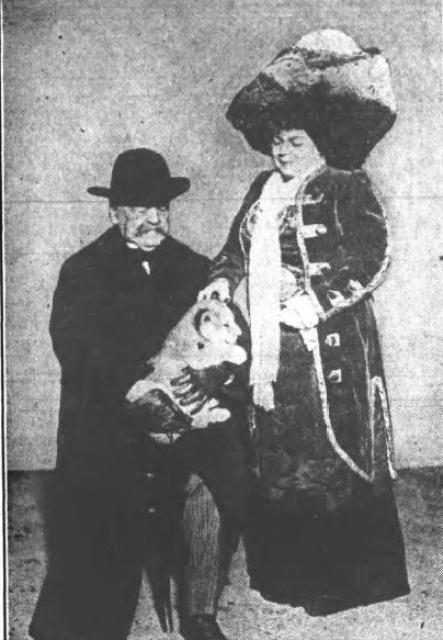
Between 1908 and 1913, The Plaza wasn’t just home to the city’s elite—it was also home to a private zoo belonging to one of history’s most fabulously eccentric characters: Princess Elisabeth Vilma Lwoff-Parlaghy.
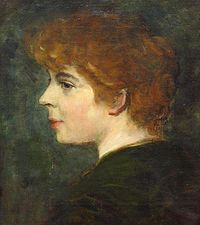
The Hungarian-born artist and self-proclaimed princess wasn’t your average guest. She was a globetrotting painter who acquired her royal title through a brief marriage to a Russian prince and simply decided to keep it. Her motto was “Love me, love my dog,” though it really should have been, “Love me, love my dogs, cats, alligators, owls, bear, and, eventually, my lion cub.”
In 1908, the Princess sailed into New York with a small army of servants and her personal menagerie, which included a Pomeranian, an Angora cat, two alligators, an ibis, an owl, and a small bear named Teddy. After being turned away from hotels like the Waldorf Astoria (alligators were, unsurprisingly, a no-go), she found a home at the brand-new Plaza Hotel.
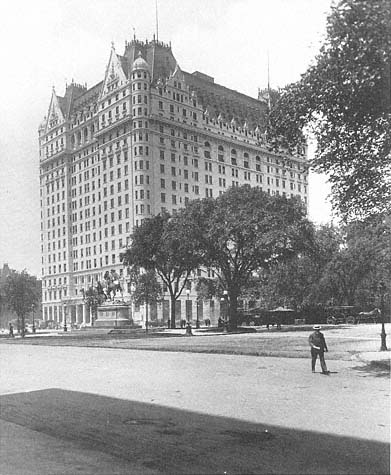
Lucky for her, The Plaza’s pet policy was incredibly lenient. The hotel happily gave her a 14-room suite on the third floor overlooking Central Park for a cool $25,000 a year (that’s over $800,000 today!). Half the suite was for her staff, her art collection, and a private chapel, while an antechamber became a five-star home for her beloved animals.
A Lion for the Princess
For a few years, life at The Plaza was a whirlwind of painting and pampering pets. But in 1911, the Princess’s animal collection was about to get a crowning jewel.
While visiting the Barnum & Bailey Circus at the old Madison Square Garden, she fell head over heels for a newborn lion cub. She tried to buy him, but the circus refused, not wanting to separate him from his mother. But the Princess was not a woman who took "no" for an answer.
She enlisted the help of a very powerful friend: General Daniel E. Sickles, a notorious and larger-than-life Civil War hero she had recently painted. The circus owners couldn't possibly refuse a request from the famous general. Sickles paid $250 for the cub, and a legendary surprise was arranged.
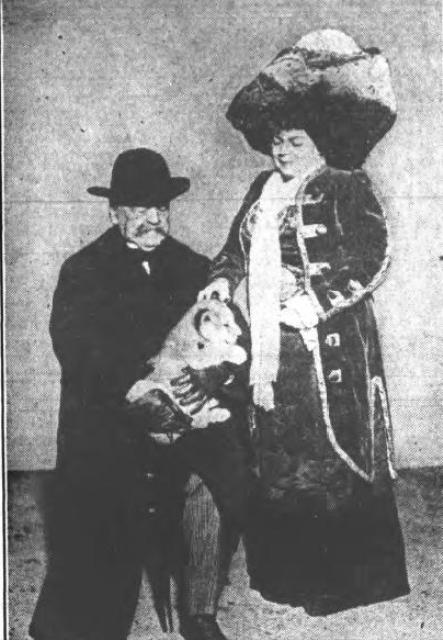
On April 17, 1911, the Princess was summoned to the Garden where General Sickles presented her with the tiny lion. "I want you to accept a souvenir of my regard," he declared. The Princess was overjoyed. She promptly ordered champagne, sprinkled some on the cub's head in a makeshift christening, and named him General Sickles in his honor—though he’d later be known as “Goldfleck.”
Then, she wrapped the little lion in a blanket, placed him in her car, and took him home to The Plaza.
Life and Times of a Plaza Lion
You read that right: a lion now lived at one of New York’s most luxurious hotels. The Plaza’s manager, Fred Sterry, was persuaded to allow Goldfleck his own room, complete with a round-the-clock trainer.
For the most part, he was a model resident. But he was still a lion. One evening, a photographer’s flashbulb spooked the cub, who bolted through an open door and into the hotel’s public corridors. Panic erupted among the guests until a quick-thinking staffer lured Goldfleck back to his room with a juicy piece of raw meat.
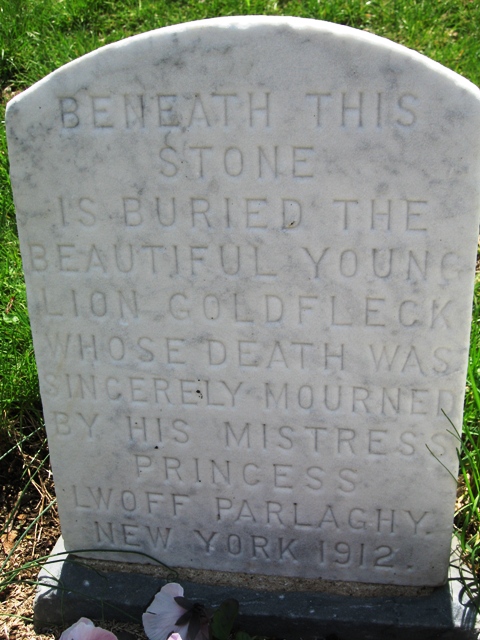
Tragically, Goldfleck’s glamorous life was short-lived. On May 21, 1912, the young lion died. Hotel officials claimed he never adapted to “civilized food” and succumbed to gout. Devastated, the Princess held a formal wake in her suite. Goldfleck’s body was laid out, covered in flower wreaths and surrounded by his favorite toys.
The funeral was an only-in-New-York spectacle. The lion was placed in a small white coffin and taken by taxi to the Hartsdale Pet Cemetery in Westchester, followed by a procession of six cars filled with human mourners. It was a farewell fit for royalty.
The End of an Era
Goldfleck’s death marked a turning point for the Princess. As World War I loomed, her fortune dwindled. She was eventually forced to leave The Plaza, unable to pay her massive bill. She downsized to a smaller suite at the St. Regis hotel and later moved to a townhouse on East 39th Street, finding homes for many of her exotic pets but keeping a few cats and dogs for company.
On August 28, 1923, the once-fabulous Princess died penniless at the age of 60, ironically in a lavish golden bed that had once belonged to Marie Antoinette. She was buried in her royal finery at Woodlawn Cemetery in the Bronx, a final, lonely tribute to a life lived on her own terms.
So the next time you’re sipping a cocktail at The Plaza or strolling through Central Park, take a moment. Remember the story of the eccentric princess and her pet lion, Goldfleck—a purr-fectly wild piece of New York City history.