No, this isn’t a TV show pilot. This was the surprising reality for the men of New York’s 42nd Precinct for ten golden years.
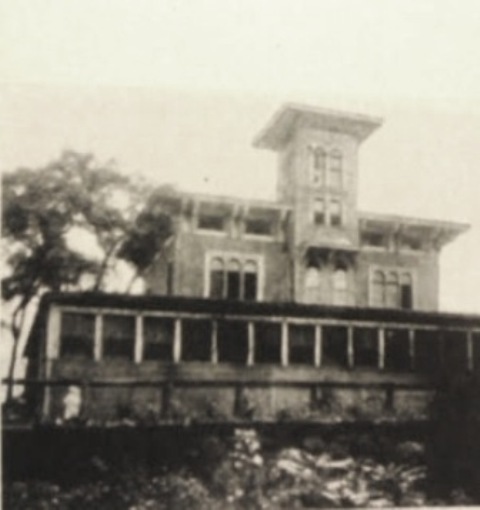
Our story starts in 1913. The rapidly growing neighborhood of Washington Heights needed more police, but the newly assigned building was unsuitable. By a stroke of luck, a beautiful, rambling three-story house became available. It sat on a wooded property between what is now Haven Avenue, Fort Washington Avenue, West 176th, and West 177th Street.
This wasn’t just any house; it was a former inn and country estate. And for the 200-plus patrolmen stationed there, it was paradise.

For a decade, this precinct felt more like a country club than a cop shop. The men were healthier, with one newspaper noting they had “greatly reduced their girth” after a year of country living. They gardened, rowed canoes across the Hudson to the Jersey shore, and enjoyed the fresh air.
And, of course, they had mascots. Sir Tom, the station cat, was the official rat-catcher. But the real star was Lady Alice, a hen from the coop on the property who took a special liking to the officers. She would follow them around the grounds, a feathered friend to New York’s Finest.

The good times rolled on, with the officers even rubbing elbows with Gilded Age celebrities like "Diamond Jim" Brady, who frequented the famous Arrowhead Inn next door.
But paradise was nearly lost on a cold winter morning, January 15, 1916.
Around 10 a.m., the owner of the neighboring inn, Ben Riley, spotted smoke and flames pouring from the second floor of the police station. He ran over to sound the alarm. The 20 officers on duty sprang into action, not just as fire-fighters, but as rescuers.
First, they rushed upstairs to the smoke-filled dormitories to wake their sleeping comrades. Then, with their fellow officers safe, they turned their attention to their other residents. A few men ran to the chicken run adjoining the building and released Lady Alice and all her feathered companions.
While awaiting the fire department, the officers formed a bucket brigade and managed to extinguish the blaze, which was caused by a faulty chimney flue. The station was saved! Their work wasn't over, though. The men spent the next hour happily rounding up the flock of grateful, clucking hens from all around the property.

This "temporary" rustic station house served the 42nd Precinct for another seven years. But by 1923, the Washington Heights countryside was disappearing. The grand mansions were being torn down to make way for the large apartment buildings we see today, driven by a city-wide housing shortage.
In August 1923, the men of the 42nd Precinct finally moved out, trading their Hudson River views for a traditional station at 152nd Street and Amsterdam Avenue. Their beloved country home was sold to developers and demolished.
What became of Sir Tom and Lady Alice isn't recorded, but we can imagine they lived out their days happily, perhaps with one of the officers who couldn't bear to leave them behind.
Today, the police precinct that once patrolled this area is known as the 34th Precinct, located a bit further north on Broadway. There are no more hens, and the views of the river are gone, replaced by a concrete cityscape.

So, next time you’re in Washington Heights, standing near the massive approach to the George Washington Bridge around West 177th Street, take a moment. Look past the traffic and the towering apartment buildings, and try to picture it: a sprawling wooden house on a hill, a group of off-duty cops playing tennis, and a friendly hen named Lady Alice, wandering the lawn in one of New York's most charming and forgotten historical footnotes.